
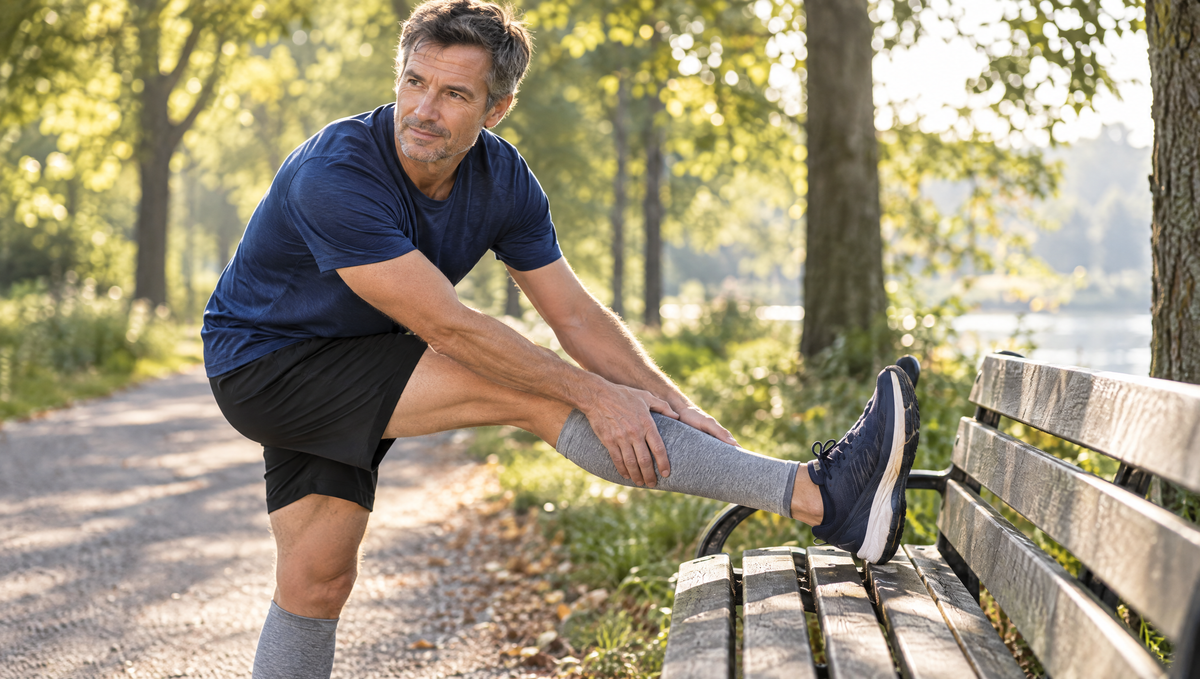
You started walking more, picked up running again or joined a new pickleball league, and now the front or inside of your lower legs aches with every step. That's a classic case of shin splints. They are common, especially when you increase activity quickly, and most people recover well with simple care. Here is a complete guide to shin splints treatment, recovery and prevention.
What are shin splints?
"Shin splints" is the common name for medial tibial stress syndrome: pain along the inner edge of the shinbone (tibia). It happens when the muscles, tendons and bone tissue around the shin are overloaded by repetitive impact. MedlinePlus covers related strains and overuse injuries.
Symptoms
- A dull ache along the inside or front of the shin
- Tenderness when you press along the bone
- Pain at the start of exercise that may ease, then return afterward
- Mild swelling in the lower leg
Common causes
- Increasing walking or running distance too quickly
- Running on hard or uneven surfaces, or downhill
- Worn-out or unsupportive shoes
- Flat feet or very high arches
- Tight calves and weak hip or ankle muscles
How to get rid of shin splints
1. Rest from high-impact activity
Give your shins a break from running and jumping for a couple of weeks. Stay active with low-impact exercise like cycling, swimming or the elliptical, as long as it's pain-free.
2. Ice after activity
Ice your shins for 10 to 15 minutes a few times a day, with a thin towel between the ice and your skin. It helps calm soreness and swelling.
3. Stretch your calves
- Wall calf stretch: hands on a wall, one foot back with the heel down, lean forward. Hold 30 seconds, then repeat with the back knee bent.
- Kneeling shin stretch: kneel on a soft surface with the tops of your feet flat and gently sit back toward your heels.
- Ankle circles: 10 slow circles in each direction.
4. Strengthen the lower legs and hips
Strong muscles absorb impact better. Start once the pain settles:
- Calf raises: rise onto your toes and lower slowly, 2 to 3 sets of 10 to 15.
- Toe raises: lean against a wall and lift your toes toward your shins.
- Heel walks: walk on your heels for 20 to 30 steps.
- Side-lying leg raises and bridges to strengthen hips and glutes.
5. Check your shoes
Running and walking shoes lose cushioning after roughly 300 to 500 miles. Choose shoes that suit your foot type, and consider arch supports if you have flat feet.
6. Try compression
Many runners and walkers wear calf compression sleeves during and after activity. Gentle compression gives the lower leg a supported feeling and can help it feel less tired and achy. Our FLEX+ Bamboo Calf Sleeve covers the calf and shin from ankle to knee and lets you wear your own socks. If you prefer a sock, AIR+ Lightweight Compression Socks are thin enough for running shoes. Compression is a comfort aid; rest and gradual training are what heal shin splints.
7. Return gradually
When you can walk briskly and hop on one leg without pain, ease back in. A common guideline is to increase weekly distance by no more than about 10%. Alternate hard days with easy or rest days, and run on softer surfaces like trails or tracks when you can.
How long do shin splints last?
Mild shin splints often improve within 2 to 4 weeks of rest and care. More severe cases can take several weeks to a few months. Returning too soon is the most common reason they come back.
See a doctor if pain is sharp and in one specific spot on the bone, hurts even at rest or at night, comes with significant swelling, or doesn't improve with rest. These can be signs of a stress fracture or compartment syndrome, which need medical care.
How to prevent shin splints
| Do | Avoid |
|---|---|
| Build up distance slowly | Big jumps in mileage or intensity |
| Replace worn shoes | Running in old, flat shoes |
| Strength train 2 times a week | Only running, no strength work |
| Mix in soft surfaces and cross-training | Always running on concrete or downhill |
| Use compression if it feels good | Ignoring pain that keeps getting worse |
Frequently asked questions
Can I walk with shin splints?
Gentle walking is usually fine if it doesn't increase the pain. Cut back if it hurts.
Do compression sleeves help shin splints?
Many runners say calf sleeves make their shins feel more supported and less fatigued. They work best alongside rest, stretching and gradual training.
Should I use heat or ice for shin splints?
Ice is usually best after activity to calm soreness. Some people like gentle heat before exercise to loosen tight calves.

 How to Put On Compression Socks Easily (and Choose the Right Size)
 Carpal Tunnel Exercises: 8 Gentle Stretches for Wrist and Hand Relief
 Compression Socks for Flying: Do You Need Them and How to Wear Them