
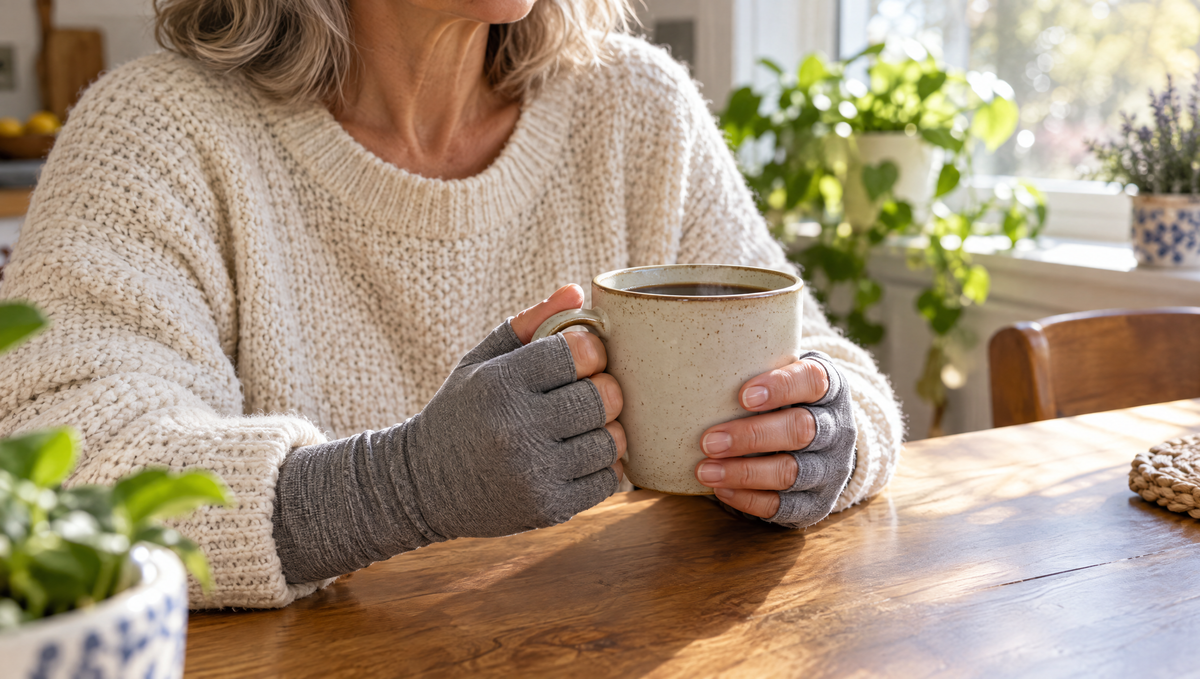
If your fingers feel stiff when you wake up, your knuckles look a little bigger than they used to, or opening a jar has become a two-handed job, you are not alone. Arthritis in the hands is one of the most common joint problems in adults, and it becomes more likely after age 50. The good news: there is a lot you can do every day to keep your hands moving and more comfortable.
This guide covers the most common types of hand arthritis, the symptoms to watch for, and nine practical ways to ease stiffness and swelling at home. It is general information, not a diagnosis, so always talk to your doctor about your own symptoms.
What is arthritis in the hands?
Arthritis means inflammation of a joint. Your hand and wrist contain more than two dozen joints, and each one has smooth cartilage that lets the bones glide. When that cartilage wears down or the joint lining becomes inflamed, the joint can become painful, stiff and swollen. The CDC estimates that arthritis affects tens of millions of American adults; its arthritis overview is a helpful place to start.
The most common types
- Osteoarthritis (OA): the "wear and tear" type. It often affects the joints closest to the fingertips, the middle finger joints and the base of the thumb. MedlinePlus explains osteoarthritis in plain language.
- Rheumatoid arthritis (RA): an autoimmune condition where the immune system attacks the joint lining. It usually affects both hands, especially the knuckles and wrists. See MedlinePlus on rheumatoid arthritis.
- Thumb base arthritis: a form of osteoarthritis at the joint where the thumb meets the wrist, which can make pinching and gripping painful.
- Psoriatic arthritis and gout: less common causes of finger swelling that need a doctor's diagnosis.
Common symptoms of hand arthritis
- Morning stiffness that eases as you move your hands
- Aching or pain in the finger joints, knuckles or thumb base
- Swelling and warmth around the joints
- Bony bumps on the finger joints (often seen with osteoarthritis)
- A weaker grip and trouble with buttons, jars, keys or writing
- Fingers that look bent or drift to one side over time
See a doctor promptly if your hands are very swollen, red and hot, if symptoms appear suddenly, or if you also have fever, fatigue or joint pain in other parts of the body. Early treatment matters, especially for rheumatoid arthritis.
What causes arthritis in the hands?
For osteoarthritis, the main factors are age, genetics, past finger or wrist injuries and years of repetitive hand use. Women are more likely to develop hand OA, especially after menopause. Rheumatoid arthritis is driven by the immune system, and family history, smoking and other factors can raise the risk. Your doctor can tell the types apart with an exam, X-rays and sometimes blood tests.
9 ways to ease stiff, achy hands
1. Warm up your hands in the morning
Warmth relaxes stiff joints. Many people soak their hands in warm water for a few minutes, use a warm towel or simply hold a warm mug before starting the day. Avoid heat on a joint that is already hot and swollen.
2. Do gentle hand exercises every day
Gentle range-of-motion exercises help keep your fingers flexible. Try these slowly, a few times each, without forcing:
- Make a soft fist, then open your hand and spread your fingers wide.
- Finger touches: touch your thumb to each fingertip to make an "O".
- Tabletop: bend at the knuckles to make an "L" shape, keeping fingers straight, then relax.
- Finger lifts: with your palm flat on a table, lift one finger at a time.
- Wrist circles: slowly rotate your wrists in both directions.
A hand therapist or physical therapist can build a program that fits your joints.
3. Try compression gloves
Compression gloves for arthritis give your hands gentle, even pressure and warmth. Many people wear them overnight to wake up with less stiffness, or during tasks like typing, gardening and knitting. Look for open-finger gloves so you keep your sense of touch, and a soft, breathable fabric you can wear for hours. Our FLEX+ Bamboo Compression Gloves are made with soft viscose from bamboo, with open fingertips and five finishes. Compression gloves are a comfort aid, not a treatment, so keep following your doctor's plan.
4. Support a sore wrist
Hand arthritis often travels with wrist stiffness. A slim wrist compression sleeve adds warmth and support without locking your wrist in a rigid splint, which is handy for keyboard work and chores.
5. Make everyday tools easier to grip
- Choose pens, utensils and toothbrushes with thick, cushioned handles.
- Use an electric jar opener or a rubber grip pad.
- Swap small buttons for magnetic closures or slip-on styles.
- Use lever-style door handles and faucet levers when you can.
6. Protect your joints with smart habits
Use your larger joints when possible: carry bags on your forearm instead of gripping with your fingers, push doors with your palm and slide heavy items instead of lifting them. Take short breaks during repetitive tasks.
7. Stay active and keep a healthy weight
Regular movement, such as walking, swimming and gentle strength training, supports joint health throughout the body and can help with energy and mood. The CDC recommends physical activity as one of the most effective ways to manage arthritis.
8. Use cold for flare-ups
When a joint is swollen and warm, a cold pack wrapped in a thin towel for 10 to 15 minutes can feel soothing. Never put ice directly on skin.
9. Talk to your doctor about treatment options
Depending on the type of arthritis, your doctor may recommend medications, splints, hand therapy or, in some cases, injections or surgery. People with rheumatoid arthritis often benefit from early treatment with disease-modifying medicines, so don't wait to get checked.
Compression gloves: what to look for
| Feature | Why it matters |
|---|---|
| Open fingertips | Keeps your touch for phones, buttons and crafts |
| Soft, breathable fabric | Comfortable for overnight and all-day wear |
| Even compression | Gentle support across palm, knuckles and wrist |
| The right size | Snug but never numb; measure across your palm below the knuckles |
| Easy care | Machine washable so you can wear them daily |
Frequently asked questions
Do compression gloves really help arthritis?
Many people with hand arthritis say compression gloves make their hands feel warmer and less stiff, especially in the morning. Research results are mixed, and gloves don't change the course of the disease, but they are a low-risk comfort option worth trying.
How long should I wear arthritis gloves?
You can wear them during the day for tasks, overnight, or both. Take them off if your fingers feel numb, tingly or cold, and give your skin a break if it gets irritated.
Is it arthritis or carpal tunnel?
Arthritis usually causes joint pain, stiffness and swelling. Carpal tunnel syndrome causes numbness and tingling in the thumb, index and middle fingers, often at night. The AAOS explains carpal tunnel syndrome. A doctor can tell them apart.

 How to Put On Compression Socks Easily (and Choose the Right Size)
 Shin Splints Treatment: How to Get Rid of Shin Splints and Keep Them Away
 Carpal Tunnel Exercises: 8 Gentle Stretches for Wrist and Hand Relief