
If your heel hurts with your very first steps out of bed, then eases after a few minutes of walking, there's a good chance you're dealing with plantar fasciitis. It is one of the most common causes of heel pain in adults, and the good news is that most people get better with simple care at home. This guide explains what plantar fasciitis is and how to treat plantar fasciitis with stretches, the right shoes and daily habits.
What is plantar fasciitis?
The plantar fascia is a thick band of tissue that runs along the bottom of your foot, from your heel to your toes. It supports your arch every time you stand and walk. When it is overloaded, it can become irritated and painful, usually right where it attaches to the heel bone. The American Academy of Orthopaedic Surgeons has a detailed guide to plantar fasciitis and bone spurs.
Common symptoms
- Sharp or stabbing pain at the bottom of the heel
- Pain that is worst with the first steps in the morning or after sitting
- Pain after (not usually during) exercise or long periods of standing
- Tenderness when you press on the inside of the heel
What raises your risk
- Age between about 40 and 60
- Standing or walking on hard surfaces for work
- Flat feet, high arches or tight calf muscles
- Extra body weight
- Worn-out or unsupportive shoes, or going barefoot on hard floors
- A sudden increase in walking, running or activity
How to treat plantar fasciitis at home
1. Stretch your calves and arches every day
Tight calf muscles pull on the heel and add strain to the plantar fascia. These plantar fasciitis stretches are simple and can be done at home. Hold each stretch for about 30 seconds, repeat 2 to 3 times and stop if it causes sharp pain.
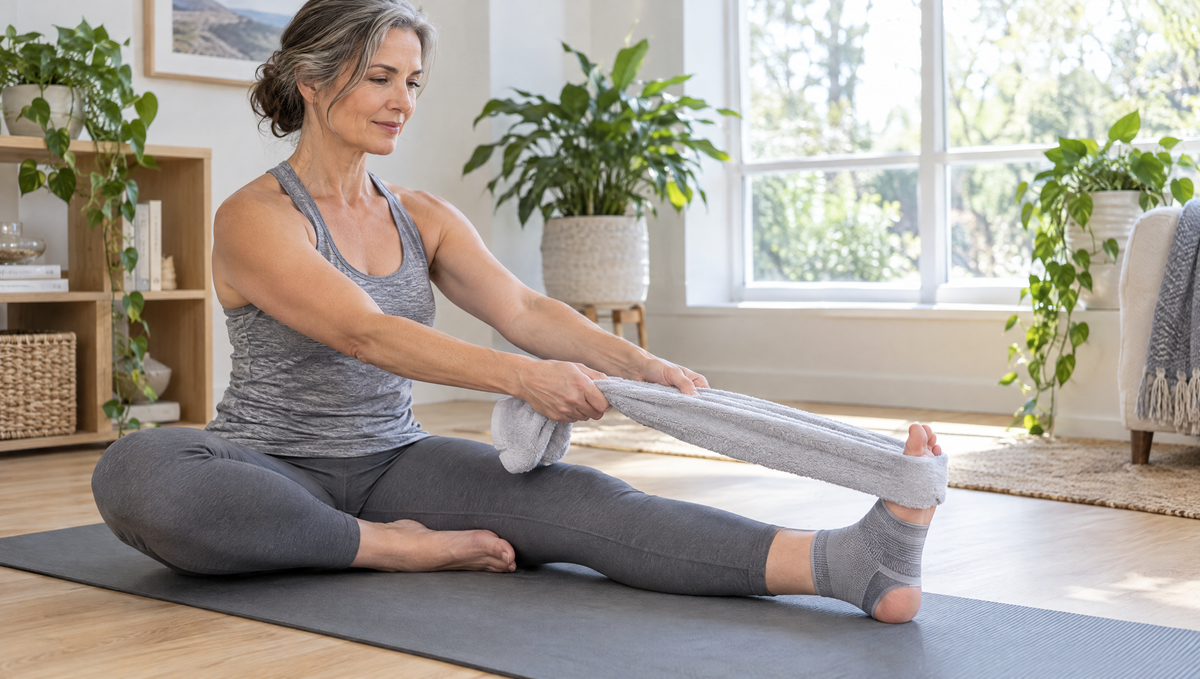
- Towel stretch (before getting out of bed): sit with your leg straight, loop a towel around the ball of your foot and gently pull your toes toward you.
- Wall calf stretch: hands on a wall, step one foot back, keep the back heel down and lean forward until you feel the stretch in your calf. Repeat with the back knee slightly bent.
- Toe stretch: sit, cross one foot over the opposite knee and pull your toes back toward your shin until you feel a stretch along the arch.
- Stair stretch: stand on a step with your heels hanging off, holding a rail, and slowly lower your heels.
2. Roll and massage your arch
Roll your foot over a frozen water bottle or a massage ball for a few minutes. The cold can feel soothing at the end of the day, and the massage loosens tight tissue.
3. Wear supportive shoes, even at home
Choose shoes with good arch support, a cushioned heel and a slightly raised heel. Replace worn-out sneakers, and avoid walking barefoot or in flat flip-flops on hard floors, especially first thing in the morning.
4. Add arch support and compression
Arch supports or over-the-counter insoles can take pressure off the plantar fascia. Many people also like a soft plantar fasciitis compression sleeve: it hugs the arch and heel and gives the foot a supported feeling during the day or at night. Our FLEX+ Arch & Ankle Sleeve is open-toe and slim enough to wear under socks or in shoes. For built-in cushioning, STEADY+ Cushion Crew Socks and STEADY+ Low Socks combine a padded sole with arch compression.
5. Rest and adjust your activity
Cut back on activities that make the pain worse, like running or long walks on hard ground, and swap in low-impact exercise such as cycling or swimming while your foot recovers. Return to activity gradually.
6. Use ice for flare-ups
Ice the bottom of your heel for 10 to 15 minutes after a long day, with a thin cloth between the ice and your skin.
7. Ask about pain relief
Over-the-counter pain relievers may help for short periods. Ask your doctor or pharmacist which is safe for you, especially if you take other medicines.
A simple daily routine
| When | What to do |
|---|---|
| Before getting out of bed | Towel stretch and gentle ankle circles |
| Morning | Put on supportive shoes or slippers; add an arch sleeve or cushioned compression socks |
| During the day | Break up long periods of standing; stretch your calves |
| Evening | Roll your arch on a cold bottle; wall calf stretch |
When to see a doctor
See a doctor or podiatrist if heel pain is severe, started after an injury, comes with numbness or tingling, or doesn't improve after a few weeks of home care. They may recommend physical therapy, custom orthotics, night splints or other treatments.
Frequently asked questions
How long does plantar fasciitis take to heal?
Many people improve within a few months with consistent stretching, good shoes and activity changes. It can take longer for some, so patience and consistency matter.
Do compression sleeves help plantar fasciitis?
Many people find arch compression makes standing and walking more comfortable. It works best alongside stretching and supportive footwear.
What is the fastest way to relieve heel pain?
Stretching before your first steps, wearing supportive shoes and icing after activity often bring the quickest relief. Talk to a clinician if pain persists.

 How to Put On Compression Socks Easily (and Choose the Right Size)
 Shin Splints Treatment: How to Get Rid of Shin Splints and Keep Them Away
 Carpal Tunnel Exercises: 8 Gentle Stretches for Wrist and Hand Relief