
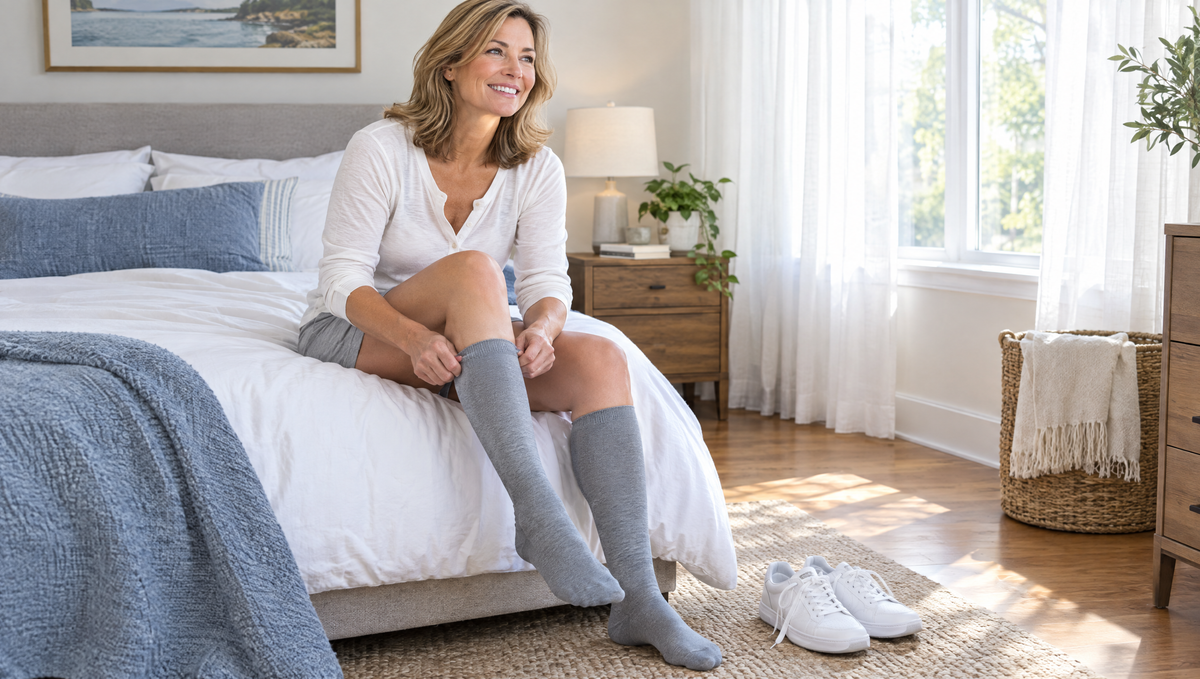
Compression socks used to be something you only saw in hospitals. Today, nurses, teachers, runners, frequent flyers and grandparents wear them every day. But what do they actually do, and are they right for you? This guide breaks down the benefits of compression socks, how they work, who should be careful and how long you should wear compression socks each day.
What are compression socks?
Compression socks are snug, stretchy socks that gently squeeze your feet, ankles and calves. Many are graduated, meaning the pressure is firmest at the ankle and lighter toward the knee. That design helps support blood flow back up the legs toward the heart.
Compression levels are measured in millimeters of mercury (mmHg). Light, everyday socks sit at the gentle end, while medical stockings with higher pressure are prescribed and fitted by a doctor. MedlinePlus explains how compression stockings are used in medical care.
How do compression socks work?
Your leg veins have to push blood uphill, against gravity. Your calf muscles help by squeezing the veins every time you walk, and tiny valves keep blood from flowing backward. When you stand or sit for hours, that system slows down and fluid can collect in the lower legs. Compression socks add steady outside pressure that supports the veins and muscles, which is why legs often feel lighter in them.
7 benefits of compression socks
1. Less leg fatigue
The most common thing people notice is that their legs feel less tired and heavy at the end of the day, especially after long shifts on hard floors.
2. Less everyday swelling
Gentle compression can reduce the puffiness that builds in the feet and ankles after long periods of standing, sitting or warm weather. Read our guide to swollen ankles for more on causes and warning signs.
3. More comfort on long flights and drives
Sitting still for hours can leave legs stiff and ankles swollen. Many travelers pack light compression socks for flights and road trips. If you have a history of blood clots, talk to your doctor about the right compression level before you travel.
4. Support for varicose and spider veins
Compression is a common part of everyday care for people with visible veins and achy legs. See MedlinePlus on varicose veins for treatment options.
5. Help during pregnancy
Leg swelling and heaviness are common in pregnancy. Many expecting mothers find compression socks comfortable; check with your doctor or midwife first.
6. A boost for active days
Runners, walkers and pickleball players often wear compression socks or calf sleeves to keep their legs feeling fresh during and after exercise.
7. Foot and arch comfort
Socks with arch compression and a cushioned sole, like STEADY+ Cushion Crew Socks, add support for sore feet and plantar fasciitis.
Who benefits most from compression socks?
- People who stand or walk all day: nurses, teachers, retail and warehouse workers
- Office workers who sit for long hours
- Frequent flyers and road trippers
- Older adults with tired, achy or swollen legs
- People with visible veins, as advised by their doctor
- Pregnant women, with their doctor's okay
- Runners and active adults
Who should not wear compression socks?
Talk to your doctor before using compression socks if you have peripheral artery disease (poor circulation in the leg arteries), diabetes with nerve damage or reduced feeling in your feet, heart failure, skin infections, open wounds or very fragile skin on your legs. Stop wearing them and get help if you feel numbness, tingling, increased pain or notice skin color changes.
How long should you wear compression socks?
- Daily wear: put them on in the morning, before swelling builds, and take them off at bedtime.
- Travel: wear them for the whole flight or drive, and walk around when you can.
- Exercise: wear them during and for a few hours after activity if it feels good.
- Medical compression: follow the schedule your doctor gives you.
Most people do not need compression socks overnight, because lying down already helps fluid drain from the legs. We cover this in detail in Can you sleep in compression socks?
How to choose compression socks
| What to check | Why it matters |
|---|---|
| Compression level | Gentle for everyday comfort; higher levels only with medical advice |
| Fabric | Breathable blends like bamboo viscose feel softer and cooler |
| Ease of putting on | Extra-stretch socks are easier for stiff hands |
| Height | Knee-high for leg swelling; low-cut for arch support during workouts |
| Size | Follow the size chart; too tight is uncomfortable, too loose does little |
Our range includes EASE+ soft knee-high socks with optional grip soles, AIR+ lightweight socks for warm weather and travel, and STEADY+ cushioned socks with arch support.
Frequently asked questions
Do compression socks really work?
Many studies support medical compression for specific vein conditions, and many people find everyday compression makes their legs feel less tired and swollen. Results vary from person to person.
Can I wear compression socks every day?
Yes, most healthy adults can. Wash them regularly so they keep their stretch, and stop if you notice discomfort or skin changes.
Are bamboo compression socks better?
Bamboo viscose blends feel soft and breathable, which makes them easier to wear for long days. The key is choosing a comfortable fit you will actually wear.

 How to Put On Compression Socks Easily (and Choose the Right Size)
 Shin Splints Treatment: How to Get Rid of Shin Splints and Keep Them Away
 Carpal Tunnel Exercises: 8 Gentle Stretches for Wrist and Hand Relief