
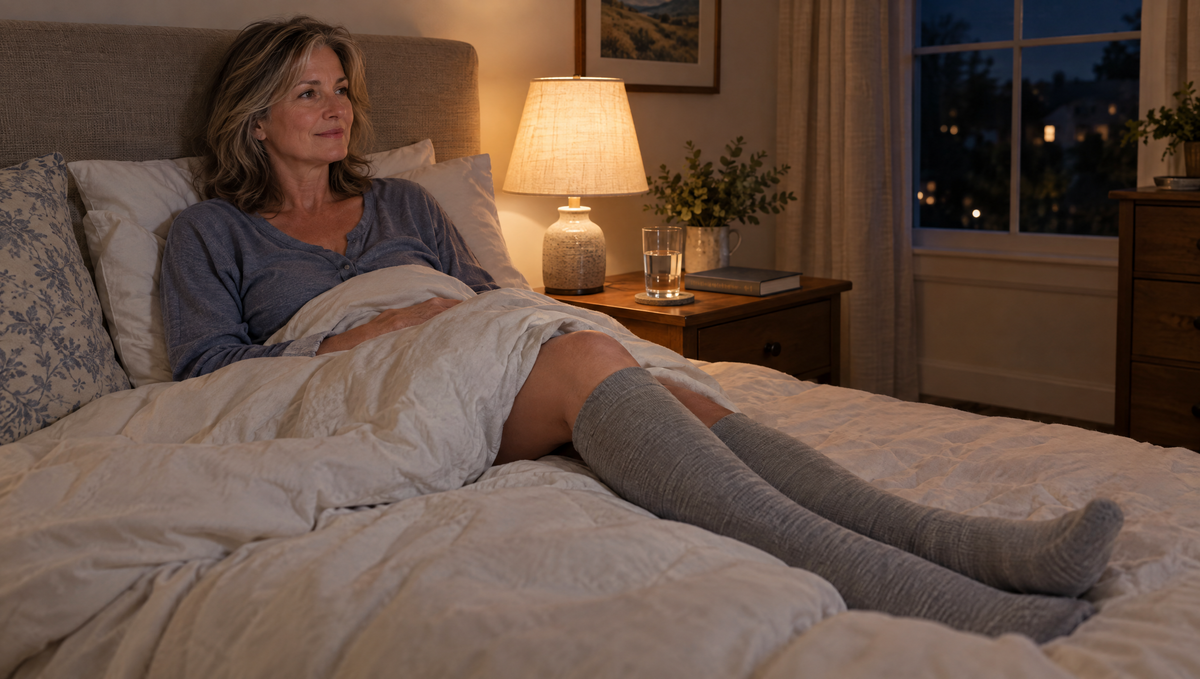
You've worn your compression socks all day and your legs feel great. So why not keep them on overnight? It's one of the most common questions we get. The short answer: most people don't need to sleep in compression socks, and some people shouldn't. Here's what to know.
The short answer
For most healthy adults, sleeping in gentle, everyday compression socks is unlikely to cause harm, but it usually isn't necessary. When you lie down, your legs are level with your heart, so gravity is no longer pulling fluid into your feet and ankles. That is the main problem compression socks are designed to help with during the day.
Medical compression stockings are a different story. If your doctor prescribed them, follow their instructions exactly: some people are told to wear them overnight after surgery or for certain vein or lymphatic conditions, while others are told to take them off at night. MedlinePlus explains how compression stockings are prescribed and worn.
When sleeping in compression socks may be okay
- Your doctor told you to. For example, after some surgeries or for specific vein conditions.
- Overnight travel. Long flights and bus rides where you sleep sitting up, with your legs down.
- Gentle socks feel comfortable and you wake up with no marks, numbness or tingling.
- Night shift workers sleeping during the day after hours on their feet, if it feels better.
When to take them off before bed
- The socks leave deep marks or feel tight after a long day.
- You notice tingling, numbness, cold toes or color changes in your feet.
- The top band rolls down and digs in, creating a tight ring around the leg.
- Your skin is dry, itchy or irritated and needs a break.
Who should not wear compression socks?
Check with your doctor before wearing any compression socks if you have peripheral artery disease or poor circulation in the arteries of your legs, diabetes with nerve damage or reduced feeling in your feet, heart failure, skin infections, open sores or very fragile skin. Get medical help right away for sudden swelling in one leg, calf pain, warmth or redness, which can be signs of a blood clot.
Better ways to help your legs at night
Elevate your legs
Before bed, lie down with your legs on a few pillows for 15 to 30 minutes. This helps fluid drain away from your feet and ankles naturally.
Move before you sleep
A short evening walk, ankle circles and calf stretches get blood moving after a day of sitting.
Put compression on in the morning
Compression works best when you put it on first thing, before swelling builds up. Our guide to the benefits of compression socks explains how long to wear them during the day.
Check your evening habits
Salty dinners, alcohol and long evenings on the sofa can all add to morning puffiness. Swapping a few habits can make a difference.
Day vs night: a quick guide
| Situation | Compression at night? |
|---|---|
| Everyday tired, achy legs | Usually not needed; elevate legs instead |
| Doctor-prescribed stockings | Follow your doctor's instructions |
| Overnight flight or bus ride | Often helpful while sitting |
| Tingling, numbness or marks | Take them off |
| Circulation problems or diabetes | Ask your doctor first |
Choosing comfortable socks for long days
The best compression sock is the one you can comfortably wear from morning until evening. Soft, breathable fabrics and an easy-on stretch make a big difference. Our EASE+ Bamboo Compression Socks are soft and forgiving, and AIR+ Lightweight Compression Socks are our thinnest option for warm days and travel.
Frequently asked questions
Is it bad to sleep in compression socks?
Not usually for healthy people wearing gentle socks, but it is generally unnecessary. Take them off if they feel tight or cause tingling.
How many hours a day should I wear compression socks?
Most people wear them from morning until bedtime. Follow your doctor's advice for medical stockings.
Can I sleep in compression gloves or sleeves?
Many people wear soft compression gloves overnight for morning hand stiffness, and some wear knee or foot sleeves at night. Comfort is the guide: remove anything that causes numbness or tingling.

 How to Put On Compression Socks Easily (and Choose the Right Size)
 Shin Splints Treatment: How to Get Rid of Shin Splints and Keep Them Away
 Carpal Tunnel Exercises: 8 Gentle Stretches for Wrist and Hand Relief